Portfolios
Overview
A school or district-wide portfolio structure supports learners in curating evidence of their learning and growth over multiple years, across multiple courses or learning experiences. Portfolios are student-curated collections of work that include a self-reflection on progress over time and why that piece was selected to include in the portfolio. They work best when they are tied to shared outcomes such as Portrait of a Learner competencies or other competency frameworks. Portfolios can take a digital form in websites or a school’s LMS or can be collected analog in folders or binders. Building a portfolio fosters student self-reflection skills and provides them a space to show growth over time. Families can also use portfolios to see their child’s favorite pieces of work. Portfolios can be used for deeper reflection during student-led conferences and defenses or presentations of learning.
You can learn more about this in our course, Design Performance-Based Assessments.
Bright Spots
Website Portfolios
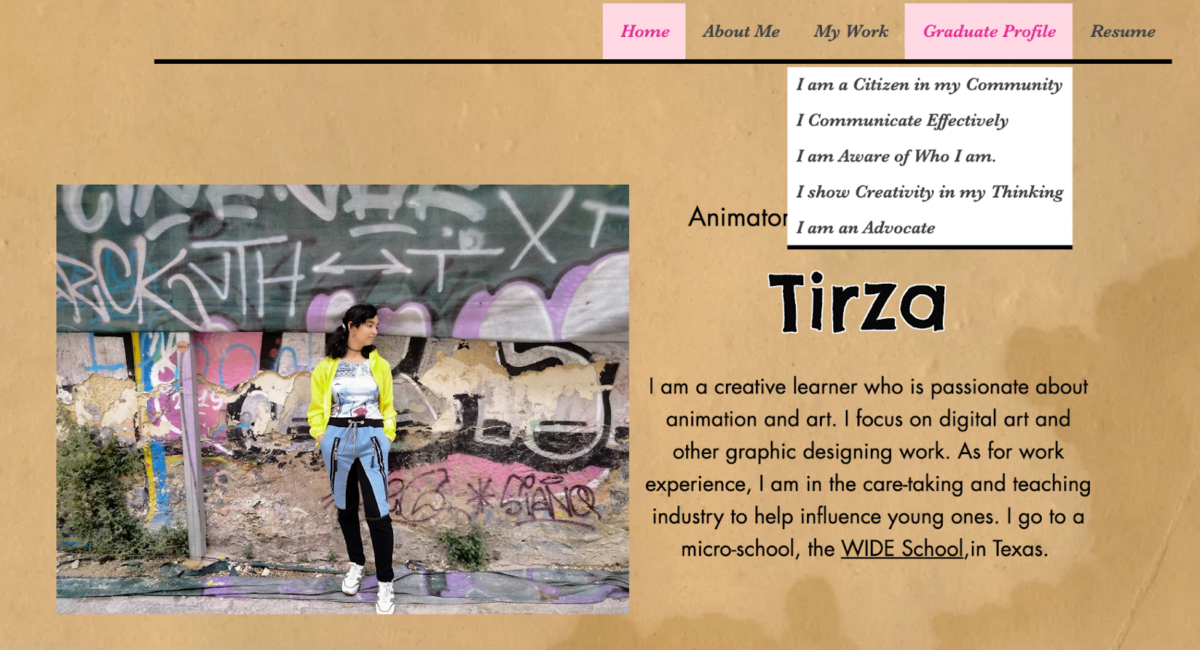
A high school student portfolio in Weebly from The W.I.D.E. School in Houston, TX showcases both student evidence and reflection for each element of the Graduate Profile. These “must-have” guidelines were shared with learners to help them prepare their portfolios.
Digital Portfolios
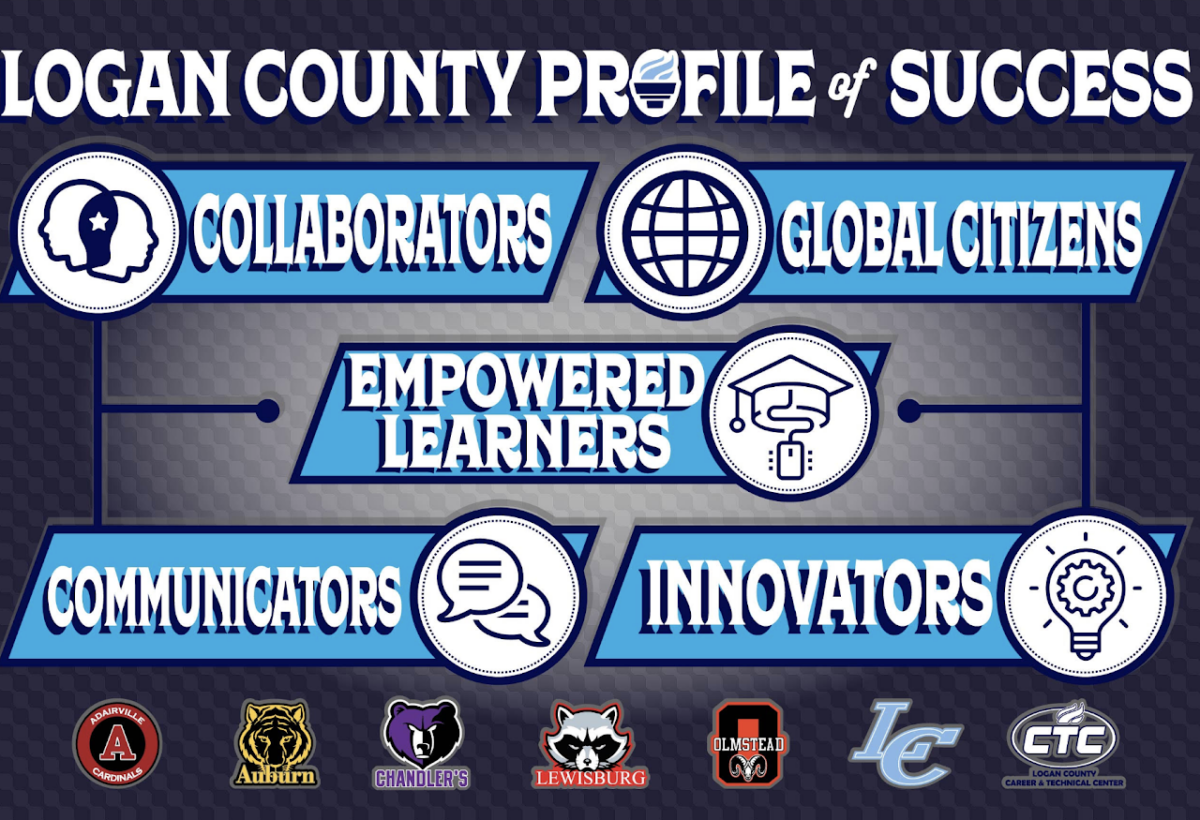
Students in Logan County, KY create portfolios aligned to their Learner Profile. Each student curates artifacts and reflections about how they brought the profile outcomes to life using SpacesEDU to digitally build their portfolios. This guide supports students in reflecting on and adding evidence to SpacesEDU.
Core Competency Portfolios

Students at the Downtown School in Seattle, WA build web-based portfolios tied to their core competencies. They are asked to reflect on and include artifacts and evidence of demonstrating each of the core competencies. Here is another web-based digital portfolio from a student at New Tech High School.
Elementary School Student Portfolios
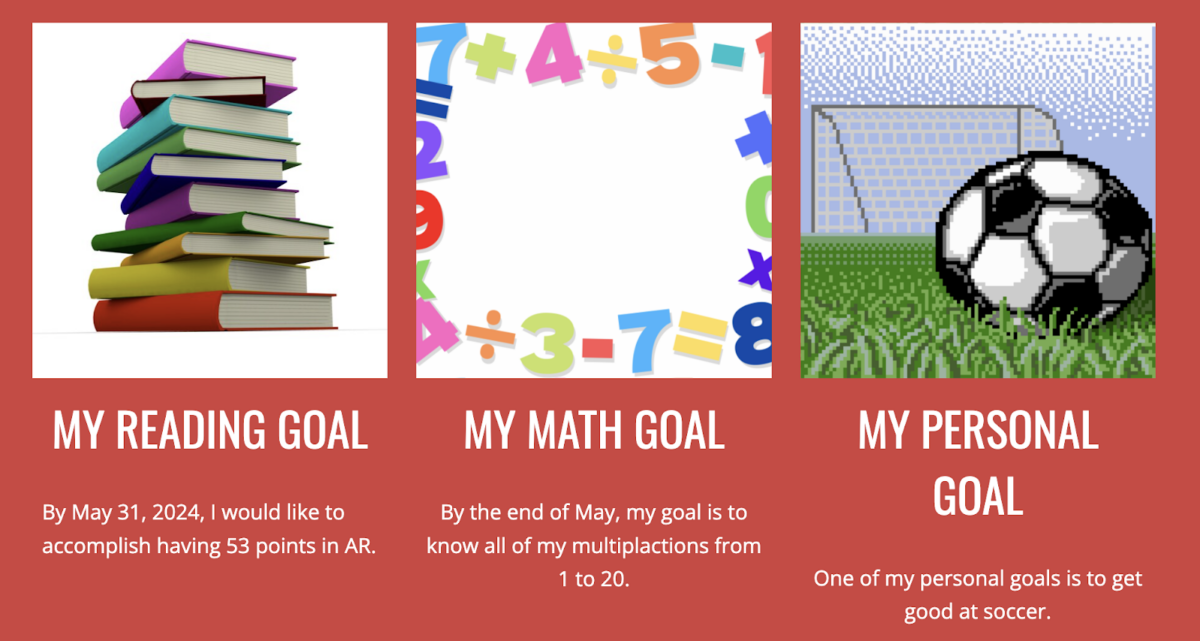
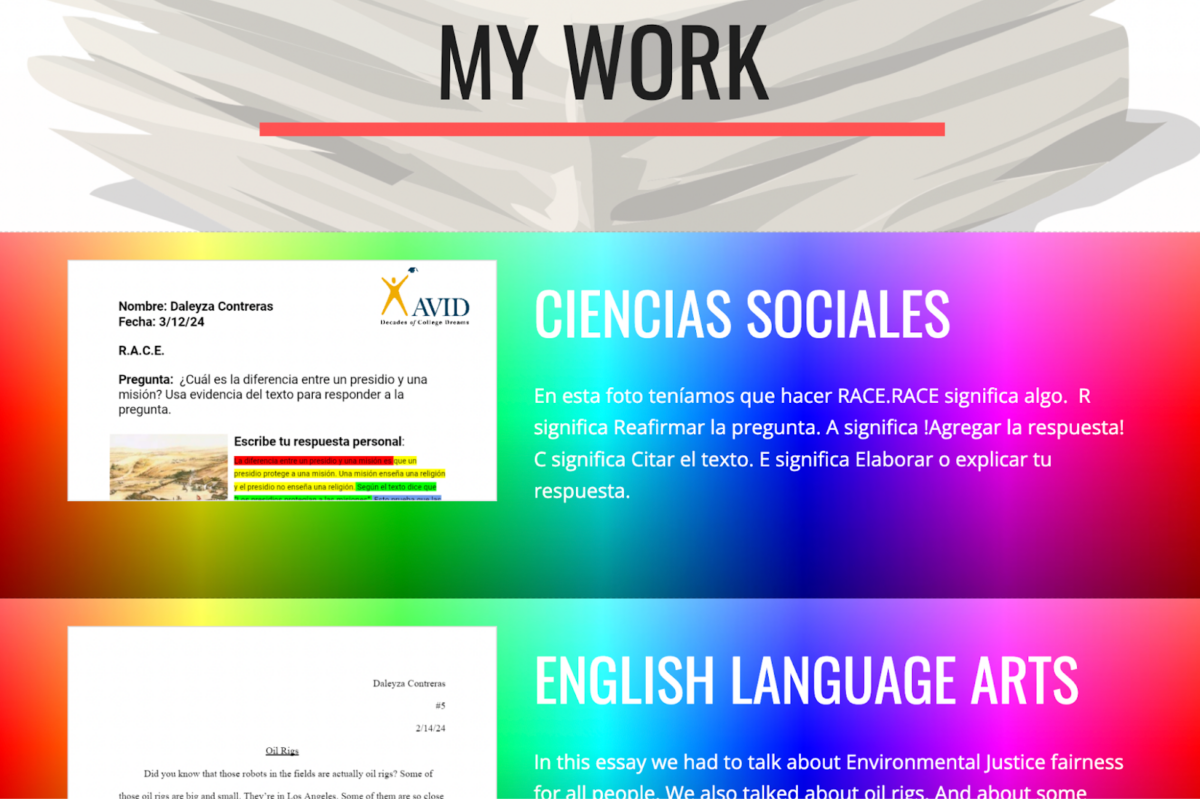
4th grade students in Eleni Murillo’s class at Lamont Elementary School District create digital portfolios to demonstrate their learning throughout the year. They use them to set goals for themselves and showcase their learning with family and friends during Open House. As students added their work from throughout the year, they were able to recall lessons and skills they have mastered and completed.
Clarity of Expectations
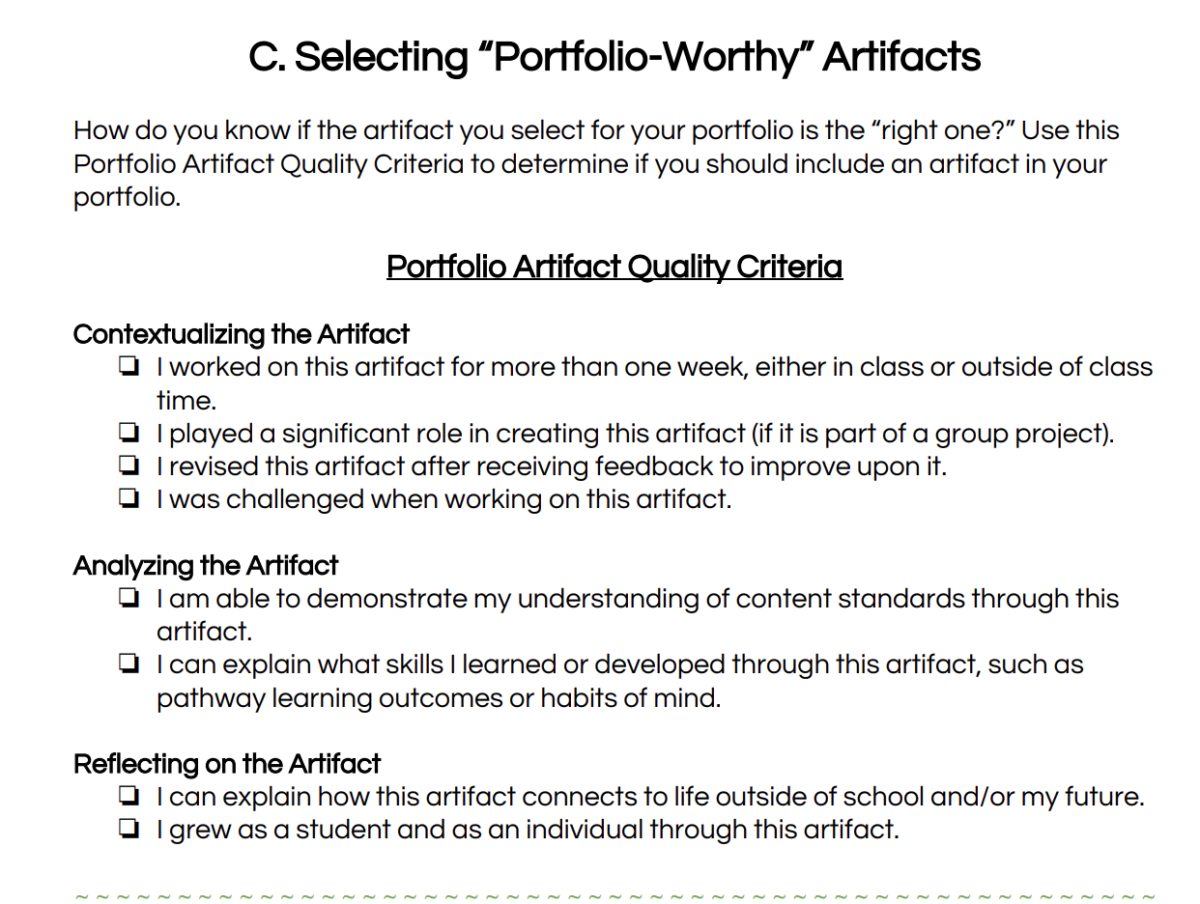
At LAUSD, a guidebook is provided to students as they build their portfolio to support them in selecting artifacts of learning and reflecting on their work and progress.
Reflection
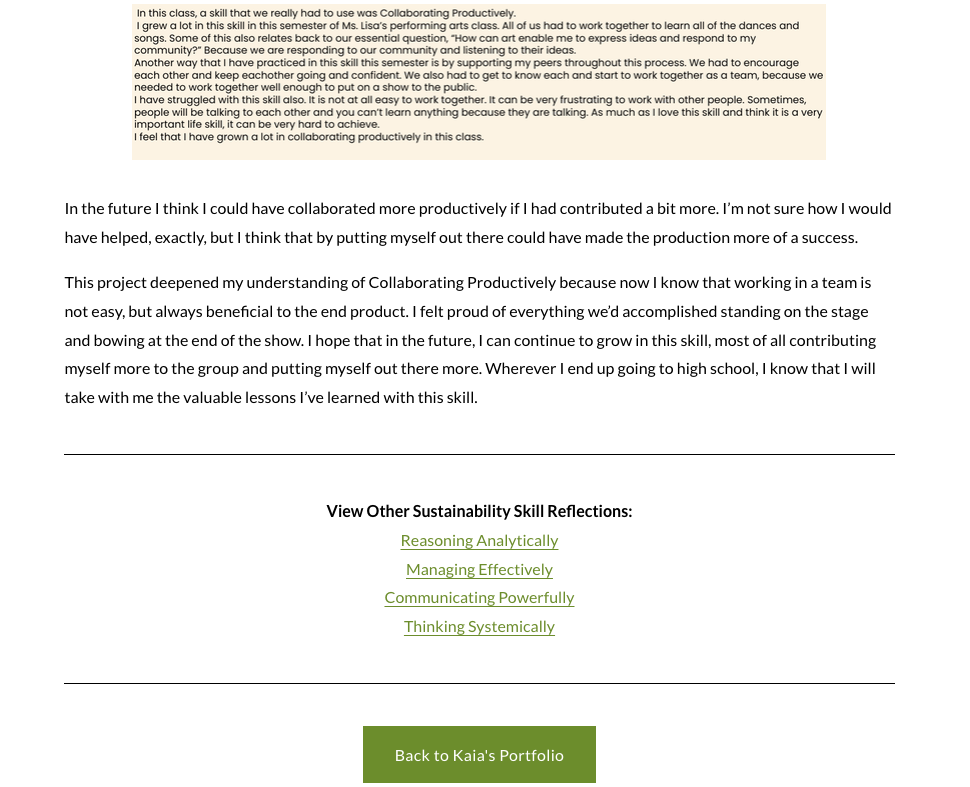
Source: Kaia’s portfolio
8th graders at SEEQS, are asked to curate exemplars and reflect on their understanding of and growth in each of the Sustainability Skills. They are given guidance on how to select exemplars and reflect in the Portfolio Defense Guidebook. Students incorporate reflections from each learning experience throughout middle school to build a robust and thorough reflection on each skill.
Prototypes and Templates
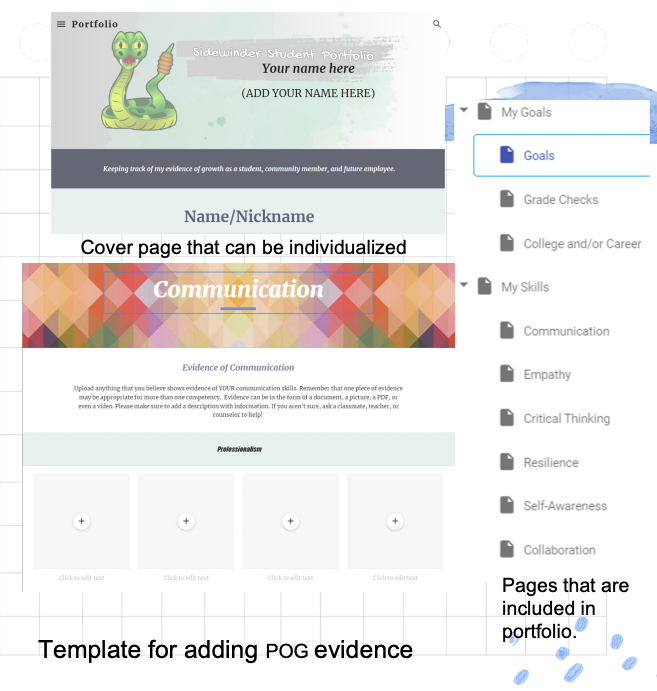
Source: Aurora Institute Symposium Presentation 2023 by Yuma Union High School Educators and Students (Robert Jankowski, Heather Madrigal, Kassandra Ramirez, Lucio Sanchez, Emeli Garcia and Anelys Romo Herrera)
When Yuma Union High School first started to implement portfolios they used template google slides to support learners in curating evidence of learning and reflections throughout the year. After one year, they switched to google sites, creating a template site for students to copy and customize.
Questions to Consider:
- What outcomes will the portfolio be aligned to, do you have a Portrait of a Learner or are there other knowledge, skills and dispositions to highlight?
- In what format will learners build and keep their evidence and reflections? Consider websites like weebly or google sites, something simple like google slides, or more complex apps and tools designed for portfolios such as Book Creator, SpacesEDU, Seesaw, Bulb, or Portmoto.
- When will learners curate evidence? Consider a weekly, monthly or quarterly cadence in which time is set aside for reflection and curation of evidence so it doesn’t all happen at the end of the year or multiple years.
- How will you define a successful portfolio? Do you have a list of must-haves or guidelines you want students to follow?
- What will feedback and support for learners look like as they build their portfolio?